Weight Loss
By Daniel Cole · Updated August 14, 2026 · Fact-checked
Calorie counting works — for the small group of people willing to weigh rice at 7 p.m. on a Tuesday. For everyone else, it tends to last about three weeks before the app gets deleted and the scale goes back in the cupboard.
Here’s the quieter truth: you can eat meaningfully less without counting anything. Portion size is one of the strongest levers in weight control, and it responds to your environment — your plates, your habits, your table setup — far more than to willpower. Change the environment, and the eating follows.
Portions crept up on all of us
The amount of food we consider normal has inflated steadily for decades. Restaurant plates grew. Bagels doubled. A single muffin today can carry the calories of a small meal from the 1980s. Even our dinnerware expanded — plates that once measured around 25 cm now commonly run 28 to 30.
Why does that matter? Because humans are terrible at judging quantity in isolation. We judge by context: a portion looks reasonable when it fills the plate, excessive when it doesn’t. Serve the same pasta on a big plate and a small one, and the big-plate group reliably eats more without noticing. Nobody decided to eat more — the containers decided for us.
Your hand is a decent measuring tool
No scale required. Your hand scales with your body size and travels everywhere with you, which makes it a surprisingly practical guide:
- Palm (thickness included) — one serving of protein like chicken, fish, or tofu.
- Cupped hand — one serving of carbs: rice, pasta, potatoes, oats.
- Fist — vegetables, and you can go bigger freely.
- Thumb — fats like oils, butter, peanut butter, or cheese.
A typical meal might be one palm of protein, one cupped hand of carbs, a fist or two of vegetables, and a thumb of fat. It’s not laboratory-precise, and it doesn’t need to be — it just needs to be consistent and roughly right.
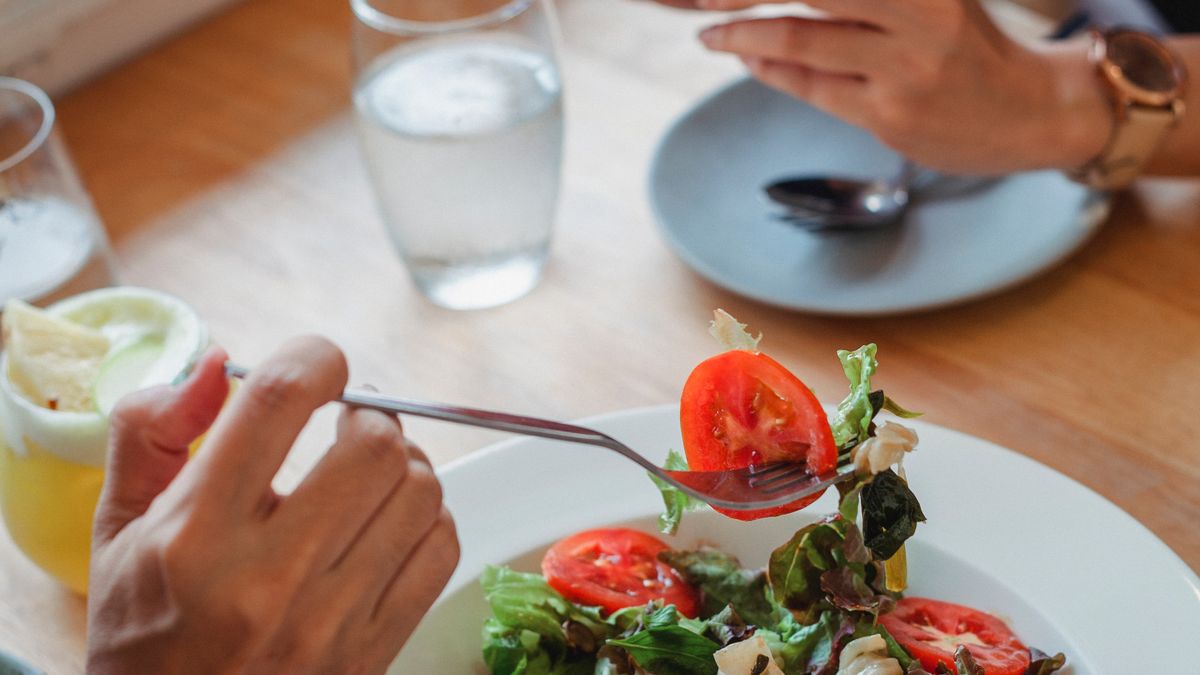
Plate tricks that quietly work
These sound almost too simple, but they’ve held up in research settings:
- Use a smaller plate for calorie-dense food. The same portion looks generous instead of stingy, and your brain reads satisfaction from the visual.
- Fill half the plate with vegetables first, then add the rest. You crowd out the dense stuff without banning it.
- Serve from the stove, not the table. When the pot sits within arm’s reach, seconds are automatic. When getting more requires standing up, you eat what’s on your plate and often find it was enough.
- Keep tempting extras out of sight. The bread basket you don’t put out is the bread you don’t eat.
Slow down — your fullness signal runs late
Satiety signals take roughly 15 to 20 minutes to catch up with what you’ve eaten. Fast eaters routinely blow past the point of comfortable fullness before their body files the report. Slower eating gives the signal time to land, which is why studies keep associating faster eating with higher body weight.
Practical versions: put the fork down between bites now and then, drink water through the meal, and don’t eat standing at the counter or in front of a screen. Distracted meals barely register — people who eat while watching something eat more at that meal and again at the next one, because the memory of eating is part of what keeps you full. If you often finish a meal and feel hungry an hour later anyway, that’s a different problem — we’ve covered why that happens in our piece on always feeling hungry on a diet.
Restaurants and takeout: play defense
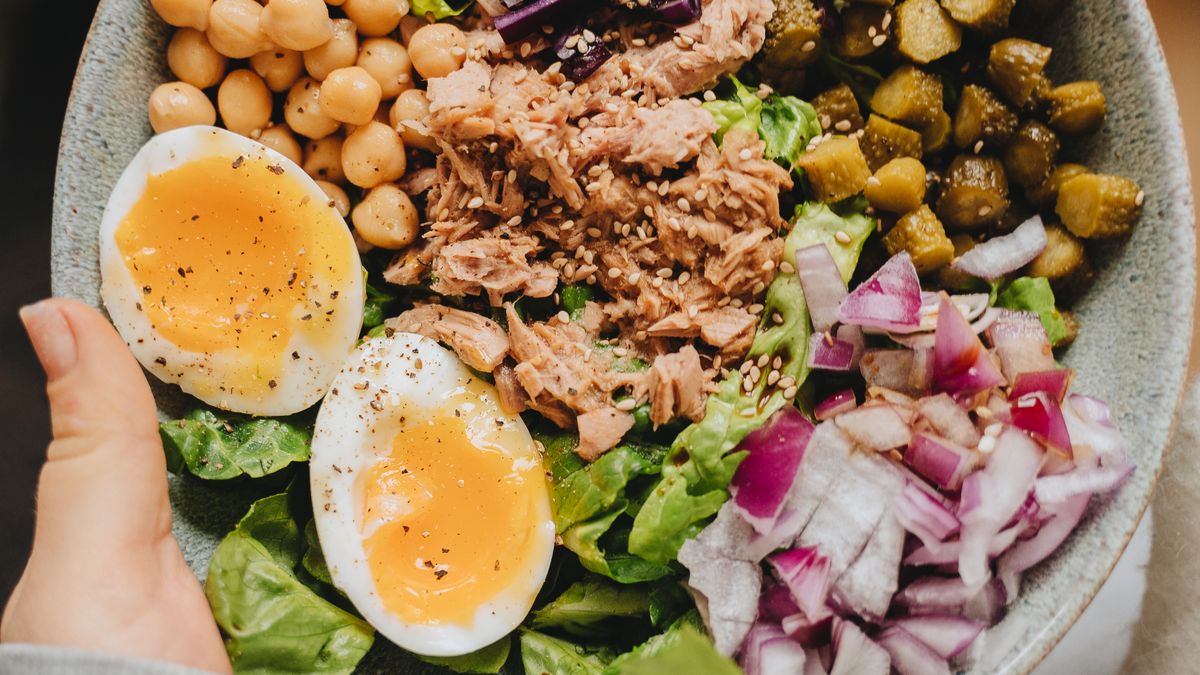
Restaurant portions are built for perceived value, not for your appetite. A single entrée can cover a full day’s calorie needs. A few moves help without turning dinner into a negotiation: split a main with someone, order a starter as your meal, or box half before you start eating rather than after you’ve grazed through it.
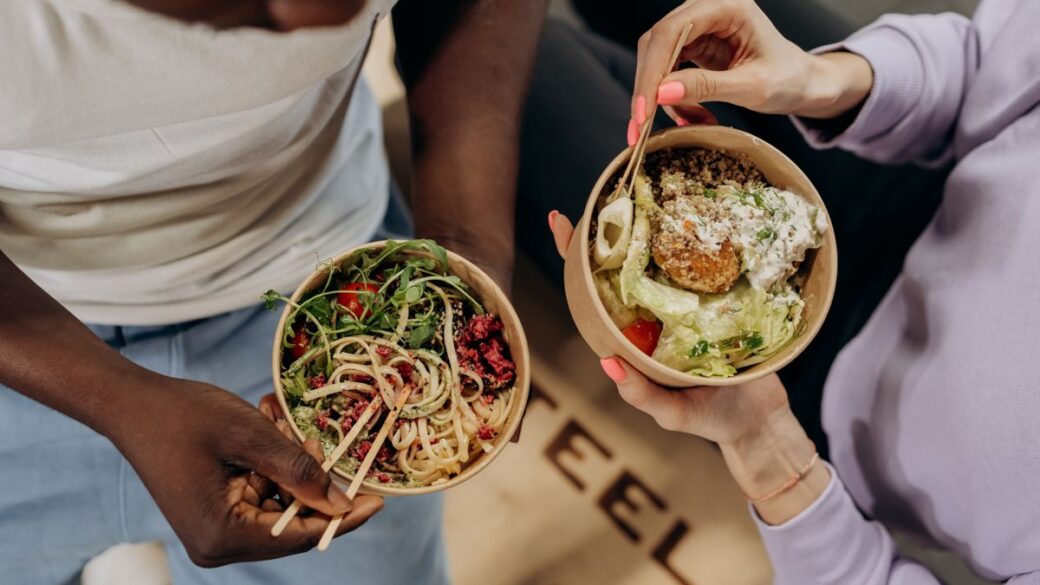
With takeout, plate it. Eating from the container hides how much is going in — the same visual blindness as the big plate, with a cardboard lid on top.
Snacks: never eat from the bag
Almost nobody overeats crackers they had to pour into a bowl. The bag is the problem: it removes every visual checkpoint between you and the bottom. Portion snacks onto a plate or into a small bowl, close the package, and put it away before you take the first bite.
It also helps to make the default snack a filling one — fruit, nuts in a small dish, yogurt. What sits at eye level in your kitchen gets eaten; what requires digging doesn’t. That’s the same environment principle again, pointed in your favor. Pairing smarter portions with foods that keep you full — we’ve written about the best foods for weight loss — makes the whole thing feel less like restriction.
What about seconds?
Seconds aren’t forbidden — they’re just worth a pause. Wait ten minutes and drink some water first. If you’re still hungry after the delay, eat, starting with vegetables or protein. Most of the time, the urge quietly expires before the timer does, which tells you it was momentum, not hunger.
Frequently asked questions
Do portion sizes matter if I eat healthy food?
Less, but yes. Vegetables and lean proteins are hard to overeat meaningfully. Calorie-dense healthy foods — nuts, olive oil, granola, avocado, smoothies — absolutely add up. The thumb-and-cupped-hand guides matter most for exactly those.
Isn’t this just calorie counting in disguise?
It’s calorie awareness without the arithmetic. Counting tracks numbers; portion habits shape behavior once and then run on autopilot. The smaller plate doesn’t need you to log anything — it works every night whether you’re paying attention or not.
How fast will I see results?
Slowly, which is the point. Trimming a few hundred calories a day through portions typically means gradual loss over months, not a dramatic drop in two weeks. Slow losses are the ones that tend to stay lost — the pattern crash diets never manage.
The takeaway
You don’t need a food scale to eat less — you need a smaller plate, a half-plate of vegetables, a slower fork, and a rule about never eating from the bag. Set up your table and kitchen so the easy choice is the reasonable one, and let the environment do the discipline for you. It’s unglamorous, invisible, and it works long after motivation has moved on.
This article is for general information only and isn’t medical advice. For personal guidance on weight or nutrition, talk to a healthcare professional or registered dietitian.