Weight Loss
By Daniel Cole · Updated August 7, 2026 · Fact-checked
Somewhere in your 40s, the routine that used to keep your weight steady quietly stops working. Same meals, similar activity, and yet the waistband argues otherwise. It’s one of the most common frustrations people bring to doctors and trainers — and it’s real, even if the explanation isn’t quite the one most of us assume.
Weight loss after 40 is harder. It is nowhere near hopeless. Here’s what actually changes, and where your effort pays off most.
What actually changes after 40
The popular villain is a slowing metabolism, but the research tells a more interesting story. A landmark 2021 analysis of energy expenditure across thousands of people found that, adjusted for body size and composition, metabolism holds surprisingly steady from our 20s all the way to about 60.
So what changes? Mostly three things. We lose muscle — a few percent per decade from our 30s onward if we don’t fight for it, and muscle is the tissue burning calories at rest. We move less, in ways too small to notice: fewer flights of stairs, more meetings, less fidgeting. And hormonal shifts — menopause in women, gradually declining testosterone in men — change where fat is stored and how hunger behaves. None of those is a locked door. All of them respond to the right inputs.
Muscle is the part you can control
From your 40s on, body composition matters more than the number on the scale. Losing weight without strength training means a chunk of what you lose is muscle — which lowers your resting burn and sets up the rebound that gives dieting its bad name.
Flip that: keep or build muscle while losing fat, and you protect your metabolism on the way down. People who lift while dieting consistently hold on to far more lean mass than people who only cut calories. That’s the quiet advantage that makes the next diet unnecessary.
Protein needs go up, not down
Older muscle is stubborn muscle — it responds less to small doses of protein than it did at 25, a phenomenon researchers call anabolic resistance. The practical answer is more, spread better: aim for roughly 25 to 30 grams of protein at each meal rather than a token breakfast and a giant dinner.
In food terms that’s eggs or Greek yogurt in the morning, a palm-sized portion of chicken, fish, tofu, or beans at lunch and dinner. Protein also keeps you fuller than either carbs or fat, which makes a modest calorie deficit far easier to live with.
Strength training twice a week is the minimum effective dose
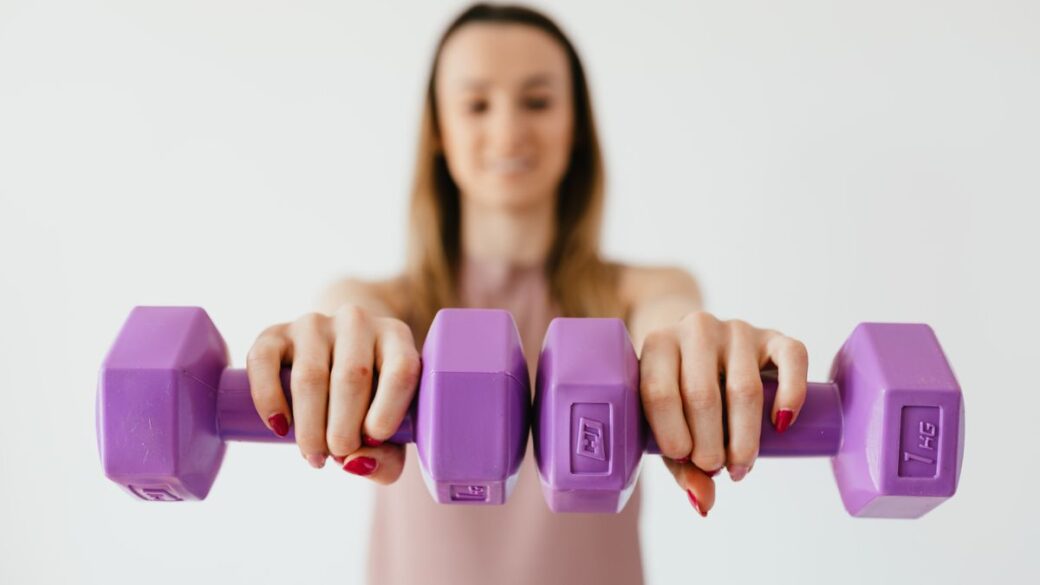
You don’t need six gym days. Two full-body strength sessions a week — squats or sit-to-stands, pushes, pulls, hinges — preserve muscle, strengthen bone (no small thing after 40), and improve how your body handles blood sugar. Bodyweight, dumbbells, bands, machines: the tool matters far less than showing up and gradually adding difficulty.
If you’re starting from zero, start smaller than feels impressive. The person still lifting in March beats the person who went hard for two weeks in January.

Don’t underrate walking
Remember that invisible drop in daily movement? Walking is the simplest way to put it back. It’s easy on joints, it doesn’t spike appetite the way hard cardio can, and it adds up fast — an extra 30 to 40 minutes a day is a meaningful slice of energy burned. Our guide to walking for weight loss breaks down how much it really takes.

Sleep and stress are weight variables now
Short sleep raises hunger hormones and drags willpower through the floor — and sleep quality often dips in midlife, particularly through menopause. Chronic stress layers on cortisol, which encourages fat storage around the middle. If your diet keeps failing at 9 p.m., the fix may be an earlier bedtime and a stress outlet, not a stricter meal plan.
The math still matters — make it gentler
A calorie deficit is still the engine of fat loss at 45, same as at 25. What changes is the wise size of it. Aggressive cuts cost more muscle and backfire harder now. A modest deficit — losing roughly half a pound to a pound a week — paired with protein and lifting is slower on the scale but keeps what you lose lost.
And before assuming your metabolism is broken, look at the honest basics: portion drift, liquid calories, weekend swings. Our piece on boosting your metabolism naturally separates what works from what’s wishful.
Frequently asked questions
Is it really harder to lose weight after 40?
Yes, but mostly for fixable reasons: less muscle, less daily movement, shifted hormones, worse sleep, busier life. Resting metabolism itself changes less than most people think before 60. Address muscle and movement and much of the disadvantage disappears.
Do I need to cut carbs after 40?
No single food group is the problem. Prioritizing protein and fiber tends to matter far more. Some people do find refined carbs easier to overeat — if that’s you, crowd them out with whole-food versions rather than declaring war on carbs entirely.
How fast should I aim to lose weight?
Half a pound to a pound a week is the sweet spot for most people over 40. Faster than that usually means more muscle loss, more hunger, and a higher chance the weight returns with interest.
The takeaway
Your body at 45 isn’t broken — it’s playing by slightly different rules. Muscle is now your metabolic bank account, protein is the deposit, strength training twice a week is the interest, and walking, sleep, and a gentle calorie deficit do the rest. Slower than it was at 25? Probably. But steadier, and far more likely to last.
This article is for general informational purposes only and is not medical advice. Talk to your doctor before starting a new diet or exercise program, especially if you have a health condition or take medication.