Men's Health
By Marcus Reyes · Updated July 31, 2026 · Fact-checked
Most men notice it in the mirror or the waistband before they notice it anywhere else. Belly fat in men has a reputation as a cosmetic problem — the “dad bod” conversation — but the fat that gathers around a man’s middle is medically different from fat elsewhere, and it deserves more respect than a punchline.
Here’s the honest version: some belly fat is normal, spot-reducing it is impossible, and the things that actually shrink it are unglamorous and well proven. Let’s get into it.
Why belly fat is different
There are two kinds of fat living around your midsection. Subcutaneous fat sits just under the skin — it’s the layer you can pinch. Visceral fat sits deeper, wrapped around your liver, pancreas, and intestines. That’s the one that matters.
Visceral fat isn’t inert padding. It behaves almost like an organ, releasing inflammatory compounds and free fatty acids straight toward the liver. High visceral fat is strongly linked to insulin resistance, type 2 diabetes, high blood pressure, and heart disease — even in men whose weight looks fine on a scale.
How much is too much
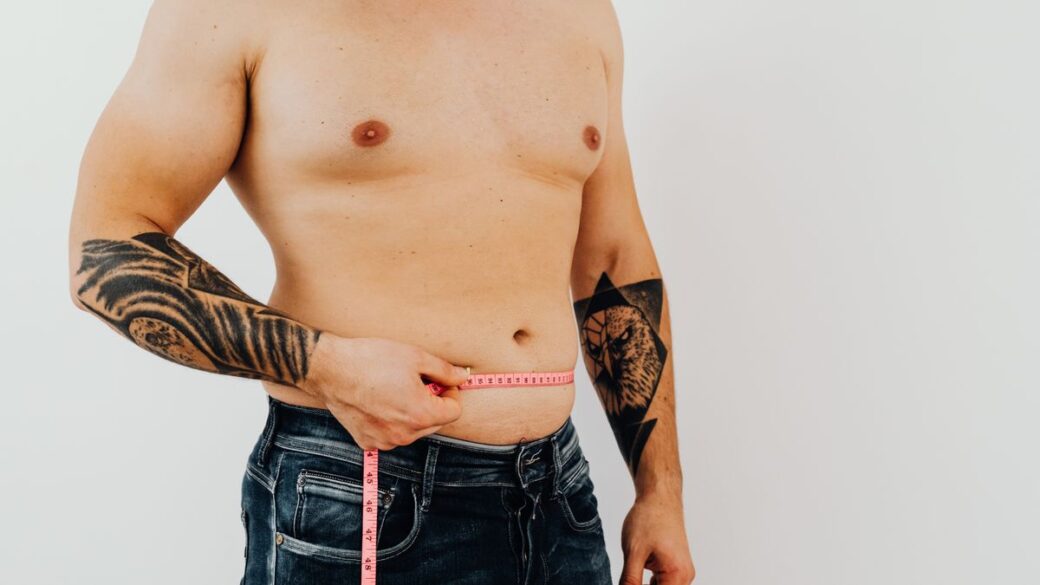
You don’t need a lab. A tape measure around your bare waist, at the level of the navel, after a normal exhale, tells you most of what you need: for men, risk rises meaningfully above about 40 inches (102 cm). Trend matters more than any single reading — measure monthly, same conditions, and watch the direction.
Waist size is a better signal than the bathroom scale for one simple reason: you can add muscle and lose fat at the same weight. The tape catches what the scale hides.
Why men store fat in the middle
Blame biology first. Men are genetically predisposed to store fat viscerally, where women (before menopause) tend to store it at the hips and thighs. Then age tilts the field further: testosterone declines gradually from the 30s onward, muscle mass drifts down, and the metabolic budget shrinks while eating habits usually don’t. Poor sleep, chronic stress, and regular alcohol round out the usual suspects.
Low testosterone and belly fat also feed each other — extra visceral fat converts testosterone to estrogen, and lower testosterone encourages more fat storage. If you’ve got other symptoms alongside a growing waist, our guide to low testosterone signs covers when it’s worth getting levels checked.
What visceral fat does to your health
The list is not subtle. Elevated visceral fat is associated with substantially higher cardiovascular risk, plus higher rates of type 2 diabetes, fatty liver disease, sleep apnea, and low-grade chronic inflammation. Because it drains directly to the liver, it distorts cholesterol and blood sugar handling in a way thigh fat simply doesn’t.
The encouraging flip side: visceral fat is also the first fat to go when you get into a calorie deficit. It’s metabolically active in both directions. Your heart benefits early — which pairs well with the habits in our piece on men’s heart health.
Why crunches won’t fix it
Spot reduction is the most persistent myth in fitness. Ab exercises strengthen the muscles under the fat, which is worthwhile — but they don’t preferentially burn the fat over them. A thousand crunches burn fewer calories than a brisk half-hour walk. You lose fat systemically, from everywhere, by maintaining an energy deficit; your genetics decide the order, and for men the belly is usually last in, first out — eventually.
What actually shrinks it
Nothing exotic. The evidence keeps pointing at the same handful of levers:
- A modest calorie deficit — 300 to 500 calories a day, mostly from cutting liquid calories, oversized portions, and late-night eating.
- Protein at every meal — it protects muscle while you lose and keeps you fuller per calorie.
- Strength training two to four times a week — muscle is your metabolic insurance policy as you age.
- Regular cardio you’ll actually do — brisk walking counts; visceral fat responds well to consistent aerobic work.
- Seven-plus hours of sleep — short sleep reliably pushes appetite hormones the wrong way.
- Less alcohol — the “beer belly” nickname is only half wrong; alcohol is calorie-dense and lowers your guard around food.

A realistic 90-day plan
Ninety days is long enough to see the tape move and short enough to stay honest. A sane template: walk 30 minutes daily, lift three days a week (full-body, compound movements), anchor each meal around a palm-sized portion of protein, cap alcohol at a couple of drinks a week, and protect your sleep like an appointment. Measure your waist every two weeks, not every morning.
Expect roughly one to two pounds of fat loss a week at the start, with the waist shrinking a notch or two over the first couple of months. Slow is not failure — slow is the version that lasts.

Frequently asked questions
What’s the fastest way to lose belly fat?
The unsatisfying truth: a consistent, moderate calorie deficit combined with strength training and sleep. Crash diets move the scale quickly but sacrifice muscle and rebound hard. Consistency beats intensity over any stretch longer than a month.
Do fat-burner supplements work?
The evidence for over-the-counter “fat burners” is weak to nonexistent, and some products carry real risks. There’s no pill that targets visceral fat. Save the money and spend it on food you’ll cook.
Can a slim man still have too much visceral fat?
Yes — it’s sometimes called being “skinny fat.” A normal weight with a soft, growing waist and low muscle mass can still mean elevated visceral fat. The waist measurement and habits matter more than the scale number.
The takeaway
Belly fat in men is a health signal, not just a fit-of-your-jeans issue — but it’s also the most responsive fat you have. A tape measure, a modest calorie deficit, weights, walking, sleep, and less alcohol will do more in ninety days than any supplement or gadget ever will. Start with the waistline number today and let the trend, not the mirror, tell you how it’s going.
This article is for general information and isn’t medical advice. Talk with a healthcare professional before making significant changes to your diet or exercise routine, especially if you have existing health conditions.