Sleep Health

By Hannah Brooks · Updated August 3, 2026 · Fact-checked
People chase better sleep with supplements, trackers, and elaborate wind-down routines, then climb into bed in a warm, glowing, noisy room. The unglamorous truth is that your bedroom environment shapes your sleep as much as almost anything you do during the day. Temperature, light, and noise are the big three — and each one has fixes that cost little or nothing. If your nights have been restless, start here before you start shopping.
Why your surroundings matter so much
Falling asleep is not a switch; it is a negotiation between your brain and its surroundings. Your body needs to drop its core temperature slightly, melatonin needs darkness to rise, and your hearing keeps standing guard all night — a leftover from times when a strange sound meant danger. A bedroom that runs hot, bright, or loud argues with all three systems at once. That is why the same person who sleeps terribly at home can sleep beautifully in a cool, blacked-out hotel room.

Temperature: the underrated heavyweight
Most sleep researchers put the sweet spot around 60 to 67°F (15.5 to 19.5°C) — cooler than most people keep their homes. Your core temperature naturally falls as sleep approaches, and a cool room gives that heat somewhere to go. A warm room blocks the exit, which is why hot nights feel so tossy and shallow: heat is especially disruptive to deep sleep and REM.
Can’t control the thermostat? Work the bedding instead: breathable cotton or linen sheets, a lighter duvet in summer, and a fan for airflow. A warm shower an hour or two before bed helps too — the after-effect, counterintuitively, is faster heat loss. And if you share a bed with someone who runs hot or cold, separate duvets solve more arguments than any thermostat setting ever will.
Light: darkness is a signal, not a preference
Even modest light in the bedroom — a streetlamp through thin curtains, a glowing charger, a hallway bulb under the door — has been shown to fragment sleep and blunt melatonin. Your eyelids are not blackout blinds; the brain registers light through closed eyes. Aim for a room dark enough that you cannot see your hand in front of your face.
- Blackout curtains or blinds are the single biggest upgrade for city sleepers.
- Cover or remove LED indicators — a strip of electrical tape works fine.
- If a partner reads late, a contoured sleep mask is a cheap truce.
- Dim household lights in the last hour before bed so melatonin can get moving early.
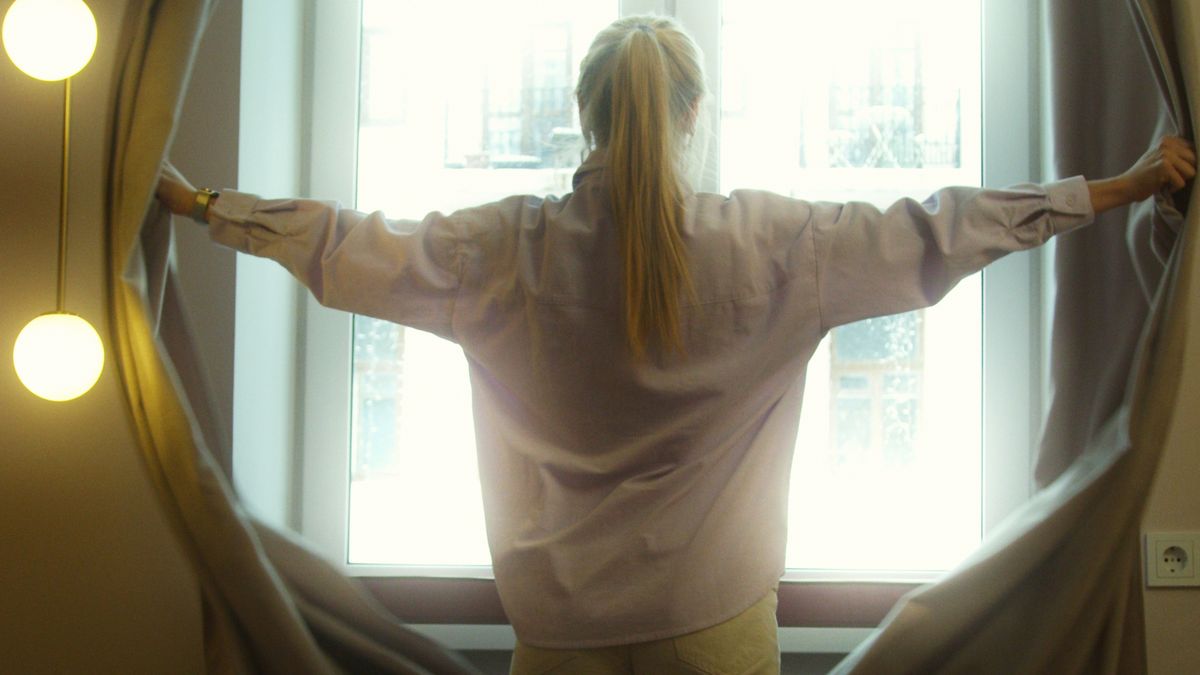
The other half of the light story happens in the morning: opening the curtains and getting bright light soon after waking anchors your body clock, making the next night’s sleep come easier. Darkness at night and brightness in the morning are a matched pair.
Noise: the guard that never sleeps
You do not have to wake fully for noise to cost you — traffic, plumbing, or a snoring partner can pull you out of deep sleep into lighter stages without leaving a memory. That is one reason you can spend eight hours in bed and still wake unrefreshed; if that sounds familiar, our guide to why you wake up tired covers the other culprits. Steady, predictable sound masks unpredictable spikes, which is why a fan, white-noise machine, or even a phone app helps so many people. Foam earplugs are the budget option and work well once you find a comfortable fit. For a snoring partner, masking helps you — but loud, gasping snoring deserves a doctor’s attention for their sake.
Your bed: comfort and association
Mattress marketing oversells precision, but the basics hold: a mattress that leaves you sore or sagging is overdue for replacement (most last 7 to 10 years), and pillows should keep your neck in line with your spine — higher for side sleepers, lower for back sleepers. Just as important is what your brain associates with the bed. If you work, scroll, and argue there, the bed stops meaning sleep. Reserve it for sleep and intimacy, and the association does quiet work on your behalf every night.
Small habits that finish the job
The room sets the stage; a few habits complete it. Keep the space reasonably tidy — visual clutter is low-grade stimulation you do not need at 11pm. Charge your phone outside the bedroom, or at least across the room, so the feed cannot follow you under the covers. And keep your wake time steady; a consistent rhythm makes every environmental fix work better. If you make the changes and still find yourself staring at the ceiling at 3am, our piece on why you wake up at night picks up where this one leaves off.
Frequently asked questions
What is the best temperature for sleep?
Roughly 60 to 67°F (15.5 to 19.5°C) suits most adults. Comfort varies a little from person to person, so treat it as a starting range — slightly cool should be the feeling when you settle in.
Is sleeping with a fan on bad for you?
For most people, no — it cools the room and doubles as white noise. If you are prone to dry eyes, sinus irritation, or allergies, point it away from your face and keep it clean, since blades collect dust.
Do I really need blackout curtains if I wear a sleep mask?
A good mask covers most of it, since the light-sensing cells that matter are in your eyes. Masks can shift or come off during the night, though, so heavy sleepers in bright bedrooms often do best with both.
The takeaway
Cool, dark, and quiet — three words carry most of the science of the sleep-friendly bedroom. Drop the temperature a few degrees, black out the light, mask the noise, keep the bed for sleeping, and let morning light reset the clock each day. None of it is expensive, and together it often does more than any gadget on the nightstand.
This article is for general informational purposes only and is not medical advice. If sleep problems persist, please consult a qualified healthcare professional.