Mental Health
By Elena Hart · Updated August 3, 2026 · Fact-checked
You pick up your phone to check one thing. Forty minutes later you’re deep in a stranger’s vacation photos, vaguely irritated and not sure why. Sound familiar? Social media isn’t good or bad for mental health – research keeps landing on a more annoying answer: it depends on how you use it, how long, and what state you’re in when you open the app. That’s actually hopeful. It means the effects are largely in your hands.
What the research actually says
Big studies on social media and wellbeing show modest average effects that hide huge individual differences. Passive scrolling – consuming other people’s highlight reels without interacting – is the pattern most consistently linked with lower mood and life satisfaction. Active use, like messaging friends or joining communities you care about, tends to look neutral or even positive. Time matters too: several studies find mood and sleep improve when heavy users cut back to around 30 minutes a day, without quitting entirely.
The comparison trap
Your feed is a stream of other people’s best moments – promotions, engagements, beach light, flattering angles. Your brain compares that curated stream against your ordinary Tuesday, and the math never favors you. Psychologists call it upward social comparison, and it quietly erodes self-esteem even when you know, intellectually, that feeds are edited. Appearance-focused content hits hardest, which is why image-heavy platforms show stronger links with body dissatisfaction, especially in young women.
Why you can’t stop scrolling
The endless feed was engineered from slot-machine psychology: variable rewards, delivered unpredictably, keep you pulling the lever. Every so often you hit something genuinely delightful, and that occasional jackpot trains your thumb to keep going. Add notifications that yank your attention back, and you get the modern default: dozens of pickups a day, most of which you don’t remember choosing. Knowing this doesn’t fix it – but it does reframe the problem. It’s not weak willpower; it’s a product doing exactly what it was designed to do.
Signs it’s affecting you
- You feel worse after scrolling than before you started
- You check apps first thing in the morning and last thing at night
- Comparing yourself to people online affects how you feel about your life
- Scrolling regularly replaces sleep, exercise, or time with people you love
- You reach for the phone automatically in every idle moment
None of these make you broken. They’re signals worth acting on, the same way persistent tiredness signals something about sleep.
Habits that change the equation
You don’t need a dramatic digital detox. Smaller, sustainable moves work better:
- Curate ruthlessly: unfollow or mute accounts that reliably leave you feeling worse. Your feed is a diet – change what’s on the menu.
- Shift from passive to active: comment, message, create – or close the app
- Turn off non-human notifications; let people interrupt you, not algorithms
- Keep phones out of the bedroom and off the breakfast table
- Set one app timer honestly, at a number you’ll actually keep

Protect your mornings and nights
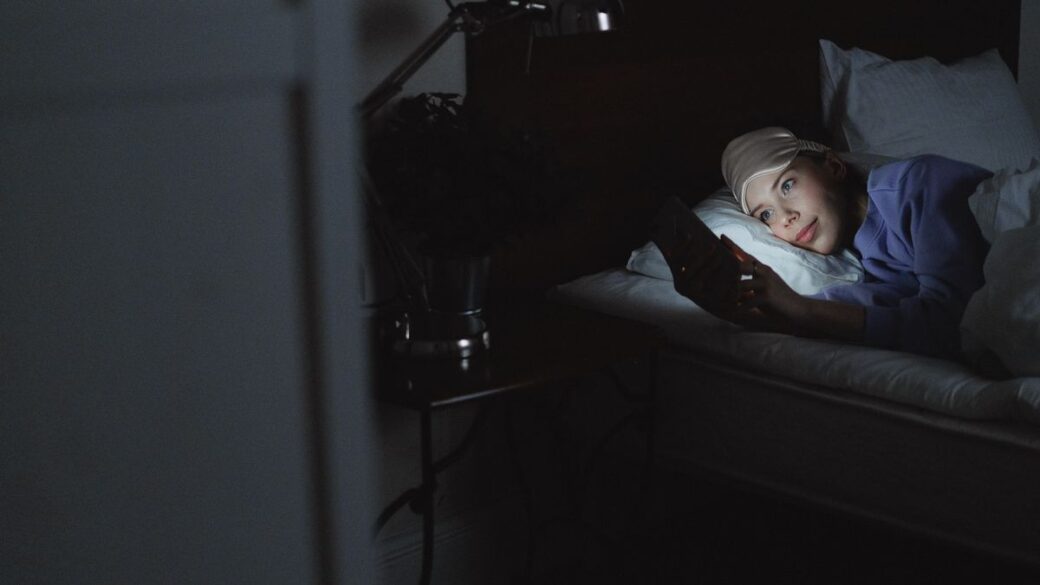
The first and last 30 minutes of your day punch far above their weight. Scrolling at night delays sleep and exposes you to blue light and stimulating content right when your brain needs to wind down – poor sleep then makes next-day mood worse, which makes doom-scrolling more tempting. It’s a loop worth breaking at the easiest point: charge your phone outside the bedroom and buy an alarm clock. Mornings work the same way – give yourself even ten phone-free minutes before letting the world’s noise in.
Fill the gap with something real
Cutting screen time creates a vacuum, and vacuums refill themselves with more screen time unless you plan otherwise. Decide in advance what the reclaimed minutes are for: a walk, a book, cooking something new, calling an actual friend. People who replace scrolling with in-person connection get a double benefit – less comparison, more of the genuine social contact that protects against loneliness. If your scrolling is driven by stress, pairing these changes with the basics in our guide to reducing daily stress helps more than either alone.

When to take it more seriously
If social media is tangled up with persistent low mood, anxiety, disordered eating, or thoughts of self-harm – yours or your child’s – it deserves a conversation with a mental health professional, not just an app timer. Online harassment and cyberbullying also warrant real support. Help works, and asking for it early is a strength.
Frequently asked questions
Should I just delete my accounts?
For most people it’s unnecessary. Research suggests changing how you use social media – less passive scrolling, a curated feed, firm time boundaries – captures most of the benefit without the social cost of disappearing.
How much social media time is healthy?
There’s no official number, but studies that capped use around 30 minutes a day found meaningful mood and sleep improvements in heavy users. Treat that as a reference point, not a rule.
Is social media worse for teenagers?
Adolescents appear more sensitive to its effects, particularly around appearance comparison and sleep loss. Delayed accounts, open conversations, and phone-free bedrooms are reasonable family defaults.
The takeaway
Social media amplifies whatever you feed it. Used actively, briefly, and with a feed you’ve curated on purpose, it can genuinely connect you. Used passively at 1 a.m., it reliably makes you feel worse. Change three things this week – notifications off, phone out of the bedroom, one honest unfollow session – and notice what shifts.
This article is for general informational purposes only and is not medical advice. If you are struggling with your mental health, consult a qualified professional.